
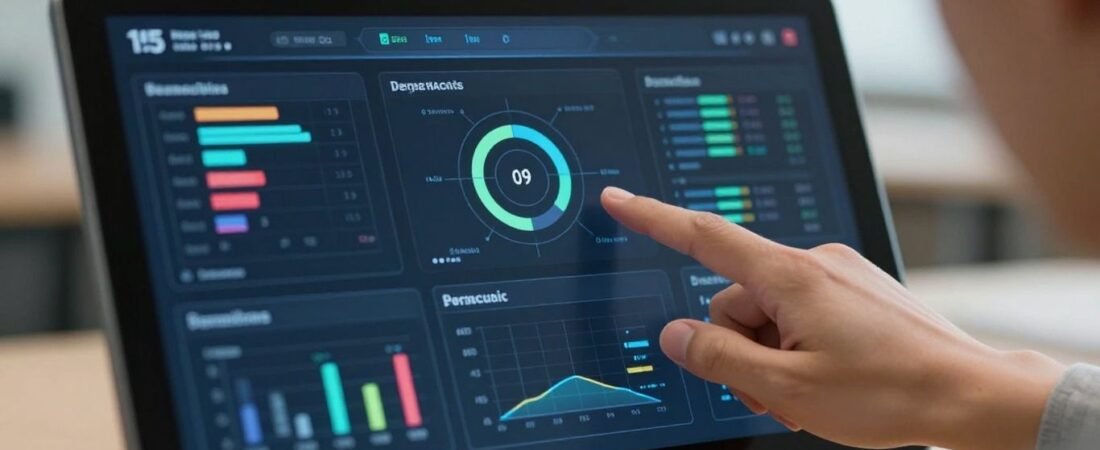
So, you’re looking to get into affiliate marketing, huh? It’s a great way to make some money online, but it can feel like a lot to figure out at first. One of the trickiest parts is knowing if your efforts are actually paying off. That’s where affiliate marketing funnel tracking tools come in. Think of them as your guide, showing you exactly what’s working and what’s not so you can make more money. We’ll break down what these tools are and why you need them.
Key Takeaways
- Understanding how your affiliate marketing funnel works is the first step to tracking its success.
- Specific tools exist to help you monitor every stage of your affiliate funnel, from clicks to sales.
- Using data from your tracking tools helps you figure out how to improve your funnel and make more money.
- Choosing the right set of tools, your ‘tech stack’, is important for efficient tracking.
- Properly implementing tracking methods like pixels and cookies is vital for accurate data.
Understanding Affiliate Marketing Funnels

Alright, let’s talk about affiliate marketing funnels. Think of a funnel like a path you guide people down. It starts broad, with lots of folks just looking around, and gets narrower as they get more interested, eventually leading to a sale. It’s not just about slapping a link somewhere and hoping for the best; it’s a planned journey.
Affiliate Marketing Funnel Structure Explained
At its core, an affiliate marketing funnel is a series of steps designed to take someone from being unaware of a product or service to actually buying it through your affiliate link. It’s about building trust and showing value along the way. Affiliate marketing is transforming into a comprehensive, full-funnel strategy, meaning it’s not just a single touchpoint anymore.
Here’s a typical breakdown:
- Awareness: This is where people first hear about a problem or a solution. You might be creating content like blog posts, social media updates, or videos that touch on a topic related to the product you’re promoting.
- Interest: They know there’s a solution, and they’re curious. This is where you offer more detailed information, maybe a guide, a comparison, or a review that highlights benefits.
- Decision: They’re considering buying. This is where you present your offer clearly, perhaps with testimonials, case studies, or a direct recommendation.
- Action: They click your affiliate link and make a purchase. This is the goal, but getting here takes careful planning.
The Bridge Page Strategy for Affiliates
So, what’s a bridge page? Imagine you’re sending traffic from an ad or a social post directly to a big sales page. It can be a bit jarring, right? A bridge page acts as a middleman. It’s a short page you control that sits between your traffic source and the merchant’s sales page. Its main job is to warm up your audience before they hit the main offer.
Why use one?:
- Builds Trust: You can introduce yourself and explain why you recommend the product.
- Manages Expectations: You can tell people what they’re about to see on the sales page.
- Captures Leads: You can offer a bonus or a lead magnet in exchange for an email address, giving you a way to follow up.
- Pre-sells the Offer: You can highlight key benefits and address potential objections.
It’s a smart way to increase the chances of someone actually buying after clicking your link. It’s a key part of many successful affiliate marketing sales funnels.
Affiliate Marketing Sales Page Structure
When you’re sending people to a sales page, whether it’s your own or the merchant’s, understanding its structure helps you know what’s working (or not). A good sales page isn’t just a wall of text; it’s designed to persuade.
Key elements usually include:
- Headline: Grabs attention and states the main benefit.
- Problem/Solution: Identifies a pain point the customer has and presents the product as the answer.
- Features & Benefits: Lists what the product does and, more importantly, what it means for the customer.
- Social Proof: Testimonials, reviews, case studies, or user numbers to build credibility.
- Offer: Clearly states what the customer gets and the price.
- Guarantee/Risk Reversal: Reduces the perceived risk of buying.
- Call to Action (CTA): Tells the reader exactly what to do next (e.g., "Buy Now," "Sign Up").
Understanding how these pieces fit together helps you evaluate if a sales page is likely to convert visitors into buyers. It’s not just about the product; it’s about how it’s presented.
Knowing these funnel stages and page structures is the first step before we even get into the tools that help you track it all.
Essential Affiliate Marketing Tracking Tools
Alright, so you’re building out your affiliate marketing funnels, and you’ve got a pretty good idea of how they should work. But how do you actually know what’s happening inside them? That’s where tracking tools come in. Without them, you’re basically flying blind, hoping people click your links and buy stuff. It’s not a great strategy, trust me.
Best Tracking Software for Affiliate Marketing
When you’re starting out, you don’t need a super complex, enterprise-level system. You need something that gets the job done without a huge learning curve. Think of it like this: you need a reliable car to get from point A to point B, not a spaceship. Some tools are built for solo operators or small teams, focusing on the core features you actually need. These often include click tracking, conversion monitoring, and basic funnel analysis. The goal is to see which traffic sources, ads, or content pieces are actually leading to sales. For instance, a tool like ClickMagick is often mentioned because it’s pretty straightforward and covers the basics well. It helps you understand where your clicks are coming from and if they’re turning into something valuable.
Affiliate Marketing CRM Comparison
Now, CRM stands for Customer Relationship Management. For affiliate marketers, this might sound a bit fancy, but it’s really about managing your contacts and understanding your audience better. While dedicated affiliate tracking software focuses on the links and sales, a CRM helps you manage the people who are clicking those links. You can track interactions, segment your audience, and send more targeted messages. This is super important for building relationships and getting repeat business. When comparing CRMs, look at how well they integrate with your email marketing tools and your tracking software. Some popular options offer free tiers that are great for beginners, allowing you to start building your contact list and sending out emails without a big upfront cost. It’s about building a list of potential buyers and nurturing them over time.
Affiliate Marketing Email Integration Tools
Email marketing is still king, even with all the new social media platforms popping up. Your email list is an asset you own, unlike your social media following. Integrating your tracking tools with your email marketing service is key. This means when someone clicks an affiliate link in your email, or lands on a page after clicking that link, your tracking software can record it. Then, your email service can potentially tag that user based on their actions. This allows for smarter email follow-ups. For example, if someone clicks a link for a specific product but doesn’t buy, you can send them more information about that product later. Or, if they buy, you can stop sending them emails about it and maybe offer something else. It’s all about making your emails more relevant to each person on your list. You can explore the top affiliate management tools for 2026 to see which ones offer good integrations.
Tracking isn’t just about seeing numbers; it’s about understanding behavior. When you know what people are doing, you can guide them better towards a purchase, which benefits both you and the customer. It’s a win-win when done right.
Leveraging Analytics for Funnel Optimization
So, you’ve got your affiliate marketing funnel set up, traffic is coming in, and maybe you’re even seeing a few sales. That’s great! But how do you know what’s actually working and what’s just… there? This is where analytics comes in. It’s not just about looking at numbers; it’s about understanding the story those numbers tell about your potential customers.
Affiliate Marketing Conversion Metrics
When we talk about conversion metrics, we’re looking at the specific actions people take that move them closer to buying. Think of it like this: someone clicking your link is a step, signing up for a webinar is another, and finally making a purchase is the big one. We need to track all these little wins, or micro-conversions, because they show us if people are engaged.
Here are some key metrics to keep an eye on:
- Click-Through Rate (CTR): How many people click your affiliate links out of everyone who sees them. A low CTR might mean your calls to action aren’t strong enough or the content isn’t relevant.
- Conversion Rate: This is the big one. It’s the percentage of people who complete a desired action (like buying) after clicking your link. This tells you how effective your entire funnel is.
- Cost Per Acquisition (CPA): If you’re running ads, this is how much you spend to get one sale. You want this to be lower than the commission you earn.
- Return on Ad Spend (ROAS): Similar to CPA, but it shows you how much revenue you’re generating for every dollar spent on ads.
Understanding these numbers helps you see where people are dropping off in your funnel.
Affiliate Marketing Analytics Setup Guide
Getting your analytics set up doesn’t have to be super complicated. For most affiliate marketers, a good starting point is Google Analytics. It’s free and powerful. You’ll want to set up goals within Google Analytics to track those key actions we just talked about, like form submissions or purchases. You can also use tracking tools that integrate directly with your affiliate networks to get a clearer picture of performance. Enabling add-on access and action tracking can give you full-funnel visibility [24c2]. This means you can see not just the final sale, but all the steps leading up to it.
Here’s a basic setup process:
- Install Tracking Code: Add the Google Analytics tracking code to your website or landing pages.
- Define Goals: Set up specific goals in Google Analytics for key actions (e.g., link clicks, email sign-ups, purchases).
- Link Affiliate Networks: Connect your affiliate network dashboards to your analytics if possible, or use UTM parameters to track specific campaigns.
- Use UTM Parameters: Tag your affiliate links with UTM parameters to track where your traffic is coming from (e.g., specific social media posts, email campaigns).
- Review Regularly: Make checking your analytics a habit, not a one-off task.
Affiliate Marketing Conversion Rate Benchmarks
It’s natural to wonder how your conversion rates stack up against others. While exact numbers can vary wildly depending on your niche, traffic source, and the offer itself, having some general benchmarks can be helpful. For many affiliate marketing funnels, a conversion rate between 1% and 5% is often considered decent. However, this is just a starting point. Some highly optimized funnels or specific offers might see much higher rates, while others might be lower.
Don’t get too hung up on hitting a specific number right away. Focus on improving your own rates over time. Small, consistent improvements compound into significant growth.
For example, if you’re driving traffic to a high-ticket item, your conversion rate might be lower than if you’re promoting a low-cost impulse buy. The key is to understand your own benchmarks and work to improve them. Analyzing user journeys helps identify areas for improvement [d183]. This data-driven approach is how you turn a good funnel into a great one.
Choosing the Right Tech Stack
Alright, so you’ve got your funnel mapped out, you know what you want to promote, and you’re ready to start tracking. But what tools do you actually need? Building your tech stack can feel a bit overwhelming, like trying to pick out furniture for a house you haven’t even bought yet. Don’t sweat it. We’re going to break down what goes into a solid setup without making your head spin.
Affiliate Marketing Tech Stack Setup
Think of your tech stack as the engine and dashboard of your affiliate marketing car. You need the right parts working together to get you where you want to go. For beginners, it’s easy to get caught up in having all the shiny new tools, but honestly, you just need a few key players to start.
Here’s a basic setup to get you rolling:
- Website/Landing Page Builder: This is where you’ll send your traffic. Tools like ClickFunnels or even simpler builders can get the job done. You need a place to present your offer or bridge page.
- Email Marketing Service: Building an email list is super important for long-term success. Services like ConvertKit or MailerLite let you capture leads and send automated emails.
- Tracking Software: This is the big one for affiliate marketing. You need to know where your sales are coming from. We’ll talk more about specific tools later, but something that can track clicks and conversions is a must.
- Analytics Tool: Google Analytics is free and powerful. It helps you understand your website traffic and user behavior.
You don’t need the most expensive tools right away. Start with what you can afford and what solves your immediate problems. As you grow and understand your needs better, you can upgrade or add more specialized software.
Best Analytics Tools for Affiliates
When it comes to understanding what’s working and what’s not, analytics are your best friend. They tell the story of your traffic and conversions. For most affiliates, especially when starting out, Google Analytics is the go-to. It’s free, it’s robust, and it integrates with pretty much everything.
But what if you want a bit more detail or a different perspective? Here are a few other types of tools to consider:
- Heatmap and Session Recording Tools: Tools like Hotjar or Crazy Egg show you where people click on your pages, how far they scroll, and even let you watch recordings of user sessions. This is gold for figuring out why people aren’t converting.
- A/B Testing Tools: Want to know if a different headline or button color works better? Tools like Google Optimize (though sunsetting, alternatives exist) or built-in features in landing page builders allow you to test variations of your pages to see which performs best.
- Platform-Specific Analytics: If you’re running ads on Facebook or Google, their native ad platforms have their own detailed analytics. Make sure you’re checking those regularly to see how your campaigns are performing.
Affiliate Marketing Dashboard Setup
Okay, so you’ve got your tools. Now, how do you see everything in one place? A good dashboard pulls all your important data together so you can make quick decisions. Your dashboard should show you the key metrics that matter most to your business.
Here’s what a basic affiliate marketing dashboard might include:
- Traffic Sources: Where are your visitors coming from (organic search, social media, paid ads)?
- Conversion Rates: What percentage of visitors are taking the desired action (e.g., clicking an affiliate link, signing up for an email list)?
- Clicks: How many times are your affiliate links being clicked?
- Sales/Commissions: How much revenue are you generating?
- Top Performing Pages/Links: Which content or links are driving the most results?
Many tracking software solutions and even some landing page builders offer built-in dashboard features. You can also use tools like Google Data Studio (now Looker Studio) to create custom dashboards by pulling data from various sources. The goal is to have a clear, at-a-glance view of your business performance. This helps you quickly identify what’s working and where you need to make adjustments. It’s all about making informed decisions to improve your affiliate marketing campaigns. Remember, the best tools are the ones you actually use and understand. Don’t get bogged down in data overload; focus on the metrics that directly impact your income and growth. You can discover more about top affiliate marketing tools for 2026 to help you build this out here. Let’s go.
Implementing Effective Tracking Strategies
Alright, so you’ve got your affiliate marketing funnel set up, maybe you’re using a bridge page or sending folks straight to a sales page. That’s great. But how do you actually know what’s working and what’s not? This is where tracking comes in, and honestly, it’s not as scary as it sounds. Without good tracking, you’re basically flying blind.
Affiliate Marketing Tracking Pixels Guide
Think of tracking pixels as tiny bits of code that tell you when someone takes a specific action after clicking your affiliate link. Most ad platforms, like Facebook or Google, have their own pixels. When someone visits a page or makes a purchase, the pixel fires and sends that information back. This helps you understand which ads or links are leading to actual results. You can set them up on your own pages, like a bridge page, to see how many people click through to the offer. It’s a pretty straightforward way to get data.
Affiliate Marketing Cookie Tracking Explained
Cookie tracking is another common method. When someone clicks your affiliate link, a small file, a cookie, is stored on their browser. This cookie has a unique ID that tells the affiliate network or merchant who sent the customer. This is how you get credit for sales. The length of time a cookie lasts varies – some are 30 days, others might be longer or shorter. It’s important to know the cookie duration for the programs you’re promoting because if a customer buys after the cookie expires, you won’t get paid.
Here’s a quick look at common cookie durations:
| Affiliate Program Type | Typical Cookie Duration |
|---|---|
| Software/SaaS | 30-90 days |
| E-commerce | 7-30 days |
| Digital Products | 30-60 days |
| High Ticket Items | 90+ days |
How to Track Affiliate Links Properly
So, how do you actually do this tracking thing right? First off, always use the links provided by the affiliate network or program. Don’t try to create your own. Most platforms have dashboards where you can generate unique links, sometimes even with subIDs. These subIDs are super helpful because they let you track performance from different sources or campaigns. For example, you could have one link for a Facebook post and another for an email. This way, you can see which specific effort is driving traffic and sales. It’s all about getting granular with your data to track your marketing funnel effectively.
You need to know where your traffic is coming from and what actions it’s taking. This isn’t just about seeing clicks; it’s about understanding the journey from the click to a potential sale. Without this insight, you’re just guessing, and guessing rarely leads to consistent income. Focus on setting up tracking from the start, even if it seems a bit technical at first. It pays off big time.
Using tools like link shorteners that offer tracking features can also be a good move. They often provide click data and sometimes even more advanced analytics. Remember, the goal is to gather as much information as possible about your audience’s behavior so you can improve your campaigns and build a better affiliate marketing funnel. Let’s go.
Optimizing Your Funnel for Conversions

So, you’ve got your affiliate marketing funnel set up, and maybe you’re even seeing some traffic. That’s great! But are people actually doing what you want them to do? Turning visitors into buyers is the whole point, right? This section is all about making sure your funnel works as hard as possible for you.
Affiliate Marketing Conversion Optimization
Conversion optimization is basically the process of making small changes to your funnel to get more people to complete a desired action, like clicking an affiliate link or making a purchase. It’s not about massive overhauls; it’s about tweaking and testing. Think of it like tuning a car engine – small adjustments can make a big difference in performance. The goal is to remove any friction points that might be stopping someone from moving to the next step.
Here are a few areas to focus on:
- Clarity of Offer: Is it super obvious what you’re promoting and why someone should care?
- Trust Signals: Do people trust you and the product? This can be through reviews, testimonials, or just a professional-looking page.
- Call to Action (CTA): Is it clear what you want people to do next? Is the button easy to find?
- Page Load Speed: Slow pages lose visitors. Make sure your pages load quickly.
Affiliate Marketing Landing Page Optimization
Your landing page is often the first real interaction a potential customer has with your offer. If it’s confusing, slow, or doesn’t speak to their needs, they’re gone. We want to make this page as effective as possible. It needs to grab attention, explain the benefit, and guide the visitor towards the next step.
Consider these points for your landing pages:
- Headline: Does it grab attention and clearly state the main benefit?
- Copy: Is it persuasive and easy to read? Does it address the visitor’s pain points?
- Visuals: Are images or videos relevant and high quality?
- Form (if applicable): Is it short and easy to fill out?
- Mobile Responsiveness: Most people browse on their phones, so it must look good and work well on mobile.
Master the basics of conversion rate optimization with beginner-friendly strategies. Learn how to boost your website’s performance and increase conversions effectively.
Affiliate Marketing CTA Best Practices
Your Call to Action, or CTA, is the instruction that tells your audience what to do next. It’s the most important part of getting a conversion. A weak CTA means missed opportunities. A strong CTA guides people smoothly towards the desired action.
Here’s what makes a good CTA:
- Action-Oriented Language: Use verbs that prompt action, like "Get," "Download," "Shop Now," or "Learn More."
- Clear Value Proposition: Briefly state what they get by clicking. For example, "Get Your Free Guide" is better than just "Submit."
- Visibility: Make your CTA button stand out. Use contrasting colors and place it where it’s easy to see.
- Urgency/Scarcity (Use Sparingly): Phrases like "Limited Time Offer" can sometimes boost clicks, but don’t overuse them or you’ll lose trust.
Remember, affiliate marketing, when approached strategically, extends beyond simple last-click attribution to become a powerful full-funnel growth driver. Optimizing each step of that funnel is key to seeing real results.
Advanced Affiliate Marketing Tracking Techniques
Alright, so you’ve got the basics down, you’re tracking your links, and maybe even using some pixels. That’s great! But if you’re looking to really squeeze every drop of performance out of your affiliate campaigns, we need to talk about some more advanced stuff. This isn’t just about knowing if a sale happened, but why and how it happened, so you can do more of what works.
Affiliate Marketing Performance Optimization Tools
When you’re ready to move beyond basic tracking, specialized tools become your best friends. These aren’t just about counting clicks; they help you understand the quality of that traffic and the user’s journey. Think about tools that offer server-to-server tracking. This is a big one because it bypasses browser limitations like cookie restrictions, giving you a more accurate picture of conversions, especially across different devices. It’s a more robust way to manage campaigns and really dig into performance data. Some platforms even let you set custom cookie durations, which can be super helpful depending on your offer’s sales cycle. If you’re serious about getting enterprise-grade tracking features, looking into these kinds of tools is a smart move.
Affiliate Marketing Split Testing Tools
Split testing, or A/B testing, is where the magic really happens for optimization. You can’t just guess what works best; you need to test it. This means creating variations of your landing pages, ad copy, email subject lines, or even your calls to action, and showing them to different segments of your audience. The goal is to see which version performs better in terms of clicks, leads, or sales. Tools designed for this make it easy to set up these tests and automatically direct traffic to the winning variation. It’s a systematic way to improve your conversion rates over time. For example, you might test two different headlines on your bridge page to see which one gets more people to click through to the offer.
Here’s a quick look at what you might test:
- Landing Page Headlines: Does one grab attention better?
- Call-to-Action Buttons: Is ‘Get Offer Now’ better than ‘Learn More’?
- Images/Videos: Does a different visual increase engagement?
- Offer Descriptions: Is a shorter, punchier description more effective?
Affiliate Marketing Heatmap Tools
Heatmap tools are fascinating because they show you visually where people are clicking, scrolling, and spending their time on your pages. You get these visual representations – like heatmaps, clickmaps, and scrollmaps – that highlight the most popular areas of your page and the areas people ignore. This kind of data is gold for understanding user behavior. You might discover that people are clicking on elements that aren’t clickable, or that they’re not scrolling down far enough to see your main call to action. It helps you identify friction points in your funnel that you might never have noticed otherwise. Using heatmaps can reveal surprising insights into how users actually interact with your content.
Understanding user behavior on a granular level is key to optimizing your affiliate funnels. It’s not enough to just track the numbers; you need to see the ‘why’ behind those numbers. Heatmaps provide that visual context, showing you exactly where attention is focused and where it’s lost. This allows for targeted improvements that can significantly boost your conversion rates. It’s about making data-driven decisions, not just educated guesses.
By incorporating these advanced techniques and tools, you’re not just running affiliate campaigns; you’re building a finely tuned conversion machine. It takes effort, sure, but the payoff in terms of increased income and better results is absolutely worth it. Exploring these advanced strategies can really help you elevate your affiliate marketing efforts for greater success.
Wrapping It Up
So, we’ve gone over why tracking your affiliate marketing funnels is a big deal. It’s not just about seeing numbers; it’s about understanding what’s actually working and what’s not. Using the right tools can make a huge difference, turning confusion into clear steps. Don’t get too caught up in having the fanciest setup right away. Start with what makes sense for you now, and build from there. Keep learning, keep testing, and remember that tracking is your guide to making smarter decisions and growing your affiliate income. You’ve got this.
Frequently Asked Questions
What exactly is an affiliate marketing funnel?
Think of an affiliate marketing funnel like a path you guide people on. It starts when someone first hears about a product you recommend and ends when they actually buy it through your special link. It’s all about leading them smoothly from being curious to becoming a customer.
Why are tracking tools so important for affiliate marketing?
Tracking tools are like your eyes and ears. They help you see which steps people take in your funnel, where they click, and what works best. Without them, you’re just guessing! Knowing this helps you make your funnel better and earn more money.
What’s a ‘bridge page’ and why would I use one?
A bridge page is a quick stop between where someone first sees your promotion and the actual sales page. It’s a great place to build excitement, share a quick tip, or remind them why the product is awesome before they click to buy. It helps connect with them more personally.
How do I know if my affiliate marketing efforts are working?
You check your results! This means looking at numbers like how many people visit your pages, how many click your links, and how many actually buy. These numbers, called conversion metrics, tell you if your strategy is hitting the mark or needs tweaking.
What’s the difference between tracking pixels and cookies?
Tracking pixels are tiny bits of code that help track actions, like a page visit or a click. Cookies are small files stored on a user’s computer that remember information, like if they’ve visited before or clicked a link. Both help track what people do online so you can understand their journey.
Can I really start affiliate marketing without spending a lot of money?
Yes, you absolutely can! While some tools cost money, you can start with free options for building a website, creating content, and even tracking basic links. The most important things are your effort and a good plan, not a huge budget.