

Trying to figure out the best keyword research tools for affiliates can feel like a maze, especially when you’re just starting out. There’s a lot of noise out there, and some tools seem way too complicated or expensive. We’ve cut through that to find the ones that actually help beginners get a handle on what people are searching for. This isn’t about fancy features you’ll never use; it’s about tools that make sense and give you real data to guide your affiliate marketing efforts. Let’s look at some options that can make a difference without breaking the bank or your brain.
Key Takeaways
- Google Keyword Planner is a free tool that offers basic keyword ideas and search volume data, making it a good starting point for beginners.
- Tools like Ahrefs and Semrush are powerful but can be expensive; however, they offer free trials or limited free versions that beginners can use to explore.
- Ubersuggest and KeywordTool.io provide more user-friendly interfaces and a good balance of features for beginners looking for keyword suggestions and search volume.
- AnswerThePublic is great for understanding user questions and finding long-tail keywords, helping you create content that directly addresses audience needs.
- Long Tail Pro and KWFinder are specifically designed to help find less competitive, long-tail keywords, which can be easier for new affiliates to rank for.
1. Ahrefs
Ahrefs is a pretty powerful tool for anyone serious about SEO, and that includes affiliate marketers. It’s not just about finding keywords, though that’s a big part of it. Ahrefs gives you a look into what your competitors are doing, which can be super helpful when you’re trying to figure out what’s working for them and how you can do it better. It’s like having a cheat sheet for the entire internet’s search landscape.
When you’re starting out, the sheer amount of data can feel a bit much, but it’s worth digging into. You can see which keywords are bringing traffic to other sites in your niche, how many people are searching for them, and how difficult it might be to rank for them. This helps you focus your efforts on terms that have a real chance of bringing in visitors.
Here’s a quick look at what you can do with Ahrefs for keyword research:
- Content Explorer: Find popular content and trending topics in your niche.
- Keywords Explorer: Get keyword ideas, see search volume, and analyze keyword difficulty.
- Site Explorer: Analyze competitor websites to see their top pages and keywords.
It’s a tool that definitely has a learning curve, but the insights you get are pretty solid. If you’re looking to really understand the search market and find those golden keywords, Ahrefs is a strong contender. Many affiliates find its data on competitor backlinks particularly useful for understanding ranking factors. Plus, they have a decent affiliate program if you decide to promote their tool, offering a 20% recurring commission for 12 months on referred sales, which can be a nice little income stream. It’s a tool that helps you build a solid foundation for your affiliate marketing efforts.
Ahrefs provides a deep dive into search data that can feel overwhelming at first, but it’s incredibly useful for understanding what content ranks and why. Focusing on the data it provides about keyword difficulty and search volume can help beginners prioritize their efforts effectively.
While it’s a premium tool with a price tag to match, the information it provides can save you a lot of guesswork and wasted effort. For serious affiliate marketers, it’s often considered an investment rather than just an expense.
2. Semrush
Semrush is a pretty powerful tool, and honestly, it’s one of the first ones I’d recommend if you’re serious about affiliate marketing. It does a lot, and while it might seem a bit much at first, it’s got some really useful features for finding keywords.
One of the best things about Semrush is its massive database. You can type in a broad topic, and it’ll spit out tons of related keywords, along with data like search volume and how hard it might be to rank for them. This helps you figure out what people are actually searching for. It’s like having a crystal ball for your niche.
Here’s a quick look at what you can do with Semrush for keyword research:
- Keyword Magic Tool: This is where the magic happens. You can explore thousands of keyword ideas, filter them by intent (informational, navigational, commercial, transactional), and see metrics like keyword difficulty and CPC. It’s great for finding those long-tail keywords that often convert well for affiliates.
- Keyword Gap Analysis: Want to see what keywords your competitors are ranking for that you aren’t? This tool is fantastic for that. You can compare your site to up to four competitors and find opportunities you might have missed.
- Topic Research: If you’re stuck on what to write about, Semrush can suggest content ideas based on a main keyword. It breaks down subtopics and related questions people are asking, which is super helpful for planning your content calendar.
It also has a robust competitor analysis feature. You can see what keywords your rivals are targeting, where their traffic is coming from, and even their top-performing content. This kind of insight is gold for figuring out your own strategy. Building a solid affiliate marketing software stack is key, and Semrush definitely belongs in that mix.
Semrush gives you a bird’s-eye view of the entire SEO landscape. It’s not just about finding keywords; it’s about understanding the competition and the market demand. This holistic approach helps you make smarter decisions about where to focus your efforts, rather than just guessing.
3. Google Keyword Planner
Alright, let’s talk about Google Keyword Planner. This is a tool that’s been around for ages, and for good reason. It’s free, which is a huge plus when you’re just starting out and trying to keep costs down. You do need a Google Ads account to use it, but you don’t actually have to run any ads to get the data.
The main thing it’s good for is getting an idea of search volume and discovering related keywords. You can type in a broad topic, and it’ll spit out a bunch of keyword ideas along with their average monthly searches. It also gives you a range for competition, which is helpful, though it’s geared more towards advertisers.
Here’s a quick look at what you can expect:
| Keyword Idea | Avg. Monthly Searches | Competition | Suggested Bid Range |
|---|---|---|---|
| affiliate marketing | 100K – 1M | Medium | $0.50 – $2.00 |
| best affiliate | 10K – 100K | Low | $0.20 – $1.00 |
| how to start | 1M – 10M | High | $1.00 – $5.00 |
It’s not the most sophisticated tool out there for affiliate marketers specifically, especially when you’re looking for long-tail keywords or trying to analyze competitor strategies. The data can sometimes be a bit broad, and the "competition" metric is really about ad competition, not organic. Still, for getting a feel for what people are searching for and finding some initial keyword ideas, it’s a solid starting point. Think of it as your first step in understanding search demand before you move on to more specialized tools. It’s a good way to get your feet wet with keyword research for affiliate marketing.
4. Ubersuggest
Ubersuggest is a pretty solid tool, especially if you’re just starting out and don’t want to spend a ton of money. It was developed by Neil Patel, and he’s put a lot of effort into making it user-friendly. You get a decent amount of data without needing a huge budget, which is great for beginners.
What I like about Ubersuggest is how it breaks down keyword ideas. You can see search volume, SEO difficulty, paid difficulty, and cost per click. It also gives you content ideas based on keywords, which can be a real time-saver. It’s not as powerful as some of the bigger, more expensive tools, but it gets the job done for basic research.
Here’s a quick look at what you can do with it:
- Keyword Ideas: Find related keywords, questions, prepositions, and comparisons.
- Content Ideas: Discover popular content related to your keywords.
- Keyword Gap Analysis: See what keywords your competitors rank for that you don’t.
- Site Audit: Get a general overview of your website’s SEO health.
The free version gives you a limited number of searches per day, but it’s enough to get a feel for the tool. For more serious work, the paid plans are quite affordable compared to others on the market, making it a good entry point for affiliate marketers looking to do some basic competitor analysis for beginners.
One thing to watch out for with any keyword tool, including Ubersuggest, is keyword cannibalization. This happens when you have too many pages on your site trying to rank for the exact same search term, and it can confuse search engines. Ubersuggest can help you spot potential overlaps, but you still need to be mindful of your content strategy to avoid this issue detect this issue.
5. KeywordTool.io
KeywordTool.io is a pretty straightforward tool that’s great for finding keyword ideas, especially if you’re just starting out. It pulls a ton of suggestions directly from Google’s autocomplete feature. You type in a seed keyword, and it spits out a long list of related terms. It’s especially good at finding long-tail keywords that people are actually searching for.
What I like about it is how it organizes the results. You get a list of "search suggestions," which are basically the terms Google suggests as you type. Then there’s a "questions" tab that shows you questions people are asking related to your keyword. This can be super helpful for coming up with blog post ideas or understanding what your audience is curious about.
Here’s a quick look at what it offers:
- Search Suggestions: Generates hundreds of long-tail keyword suggestions based on your seed keyword.
- Questions: Lists questions people are asking related to your topic.
- Prepositions: Shows keywords that include prepositions like "for," "with," "how to," etc.
- Comparisons: Provides keywords that involve comparisons, like "X vs Y."
It also has a "related" tab, which gives you even more ideas based on Google’s related searches. The free version gives you a good amount of data, but if you want to see search volumes, cost-per-click (CPC) data, and competition levels, you’ll need to upgrade to the Pro version. For beginners, though, just getting a massive list of keyword ideas is a huge win. It’s a solid way to start brainstorming and can help you discover terms you might not have thought of otherwise. This tool can really help you understand the language your potential customers use when searching online, which is key for any affiliate marketing strategy how to choose a profitable affiliate niche.
While it doesn’t offer the deep analytics of some of the bigger players, KeywordTool.io excels at sheer volume of ideas. It’s like a brainstorming partner that never runs out of suggestions. Just remember to cross-reference the ideas with other tools to get a full picture.
6. Moz Keyword Explorer
Moz Keyword Explorer is another solid option for affiliate marketers looking to get a handle on keyword research. It’s part of the larger Moz Pro suite, which offers a bunch of SEO tools, but the Keyword Explorer can be used on its own to find good keywords.
What’s nice about this tool is that it breaks down keyword data in a pretty clear way. You get metrics like Keyword Difficulty, which tells you how hard it might be to rank for a specific term, and Volume, which is the estimated monthly searches. It also shows you something called "Organic CTR," which is basically how many people are likely to click on your link if you rank well. This helps you figure out if a keyword is worth chasing.
Here’s a quick look at some of the data you might see:
| Keyword | Monthly Volume | Keyword Difficulty | Organic CTR |
|---|---|---|---|
| best affiliate marketing tools | 1,500 | 45 | 2.5% |
| how to start affiliate marketing | 5,000 | 60 | 3.1% |
| affiliate marketing for beginners | 3,000 | 55 | 2.8% |
Moz Keyword Explorer also helps you find related keywords and questions people are asking. This is super helpful for coming up with content ideas that your audience is actually searching for. It’s a good tool for understanding the landscape of a keyword before you commit to writing about it. You can start your keyword research process here and get a feel for what might work for your niche.
Sometimes, just seeing the related keywords can spark a whole new content strategy you hadn’t considered. It’s like looking at a map and finding hidden paths.
They offer a limited number of free searches per month, which is great for beginners who are just testing the waters. If you find yourself using it a lot, you might consider upgrading to a paid plan for more features and unlimited searches. It’s definitely worth checking out if you want a tool that provides good insights without being overly complicated. You can find out more about how these tools help improve your online presence here.
7. AnswerThePublic
AnswerThePublic is a really neat tool for figuring out what questions people are actually asking online. You type in a keyword, and it spits out a bunch of questions, prepositions, comparisons, and alphabetical lists related to that topic. It’s fantastic for finding content ideas that directly address what your potential audience is curious about.
Think of it as a direct line to the thoughts of people searching for solutions or information. For affiliate marketers, this is gold. Instead of guessing what to write about, you can see the exact phrasing people use when they’re looking for products or information related to your niche.
Here’s how it can help you:
- Discover content gaps: Find questions nobody else is answering well.
- Generate blog post ideas: Turn common questions into helpful articles.
- Understand user intent: See what people really want to know before they buy.
- Create better FAQs: Build out comprehensive frequently asked questions sections.
The visual aspect of AnswerThePublic is also a big plus. It presents the data in easy-to-understand charts, like a "question wheel" or "preposition clouds." This makes it simple to spot trends and popular queries at a glance. It’s a great way to get a feel for the language your audience uses, which is super important for writing copy that connects. If you’re just starting out and trying to figure out what to talk about, this tool can really point you in the right direction for affiliate marketing keyword research guide.
It’s not about finding obscure terms; it’s about understanding the everyday language and concerns of people who might eventually become your customers. This tool helps you get inside their heads.
8. Long Tail Pro
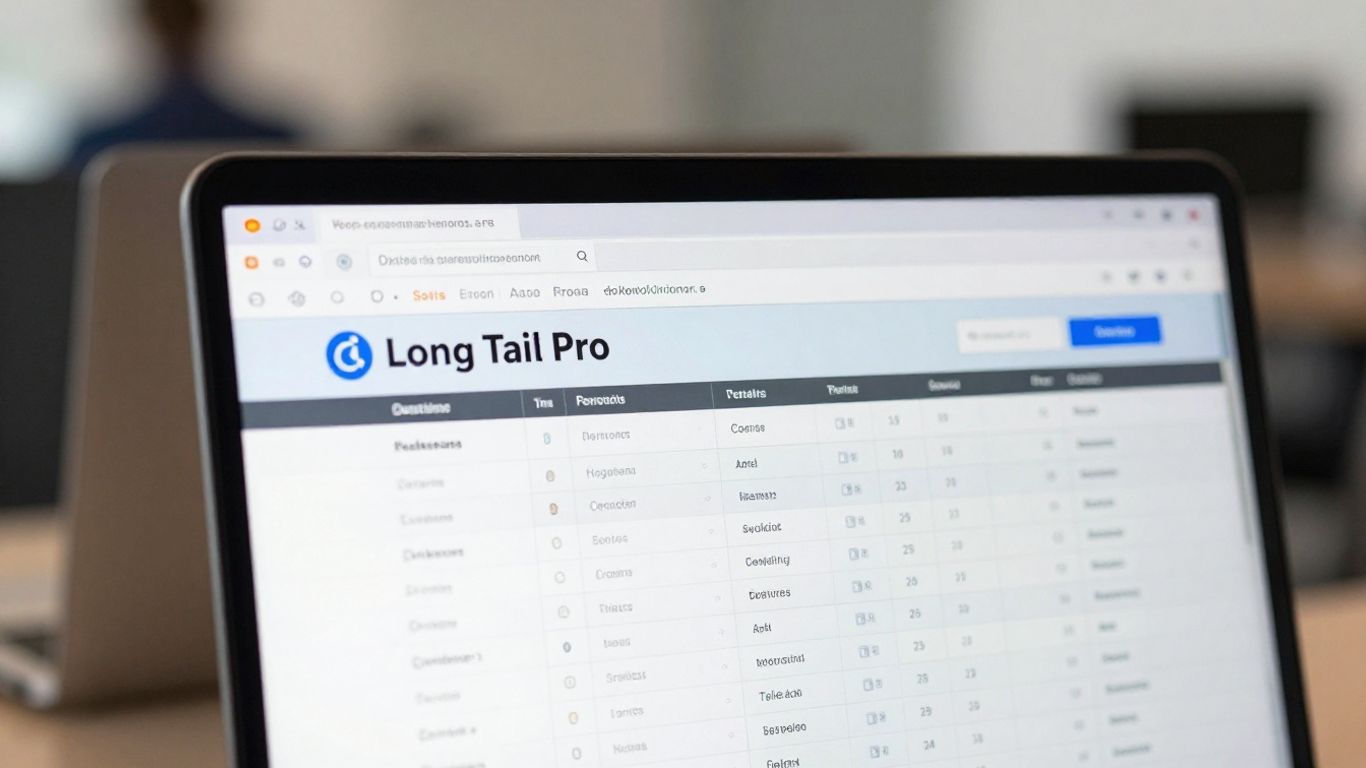
Long Tail Pro is a tool that really focuses on finding those specific, less competitive keywords. If you’re just starting out, trying to rank for broad terms like "shoes" is probably going to be a losing battle. Long Tail Pro helps you dig deeper and find phrases people are actually searching for when they’re closer to making a purchase.
This tool is pretty good at showing you keyword difficulty, which is super important for beginners. It helps you see how hard it might be to rank for a particular term. The idea is to target keywords that have decent search volume but low competition. This gives you a much better shot at getting some traffic without needing a massive SEO budget or years of experience.
Here’s a quick look at what it offers:
- Keyword Suggestions: Generates a bunch of related keywords based on a seed term.
- Keyword Difficulty Score: Gives you a number to estimate how hard it will be to rank.
- SERP Analysis: Shows you the current top-ranking pages for your target keyword, so you can see what you’re up against.
- Profitability Metrics: Helps you identify keywords that have the potential to make you money.
It’s not the flashiest tool out there, and the interface can feel a little dated, but it gets the job done for finding long tail keywords. It’s a solid choice if you want to understand the competitive landscape for specific phrases before you commit to writing content. You can get a good feel for the basics of keyword research with resources like this syllabus notes page on Long Tail Keywords.
9. SpyFu

SpyFu is a tool that really shines when you’re trying to figure out what your competitors are up to. It’s not just about finding keywords; it’s about seeing the actual keywords that other people are ranking for and, more importantly, the ones they’re paying for in ads. This can give you a massive head start, especially when you’re just starting out and don’t have a ton of data yourself.
Think of it like this: instead of guessing what might work, you can see what’s already proven to bring traffic. SpyFu lets you look up any domain and see their top organic keywords, their most profitable paid keywords, and even their ad copy. This kind of insight is gold for affiliate marketers who need to find profitable niches and understand buyer intent.
Here’s a quick look at what SpyFu offers:
- Competitor Keyword Analysis: See what keywords your rivals are ranking for organically and with paid ads.
- Ad Copy Insights: Discover the exact ad headlines and descriptions that are working for others.
- Historical Data: Access keyword data going back years, which can be super helpful for spotting trends.
- Cost-Effective Plans: SpyFu offers plans that are pretty reasonable, especially for beginners. The Basic plan starts at $39/month, and their Pro + AI plan is $89/month, making it a solid choice for those watching their budget cost-effective plans for marketers.
The real power of SpyFu for beginners lies in its ability to demystify competitor strategies. You can reverse-engineer successful campaigns and apply those learnings to your own affiliate efforts without spending a fortune on trial and error.
While it might seem a bit overwhelming at first, focusing on the "Kombos" feature, which shows you keywords shared between organic and paid search, can be a great starting point. It helps you identify high-intent keywords that are likely to convert.
10. KWFinder
KWFinder is a tool that really shines when you’re trying to find those specific, long-tail keywords. It’s part of the Mangools suite, and honestly, it’s pretty straightforward to use, which is a big plus when you’re just starting out.
What I like about it is how it helps you pinpoint keywords that aren’t super competitive. You know, those phrases people actually type into Google when they’re looking for something specific. It gives you search volumes and a difficulty score, so you can get a good idea if a keyword is worth going after. This makes it easier to rank for terms that might not have massive search numbers but attract a really targeted audience.
Here’s a quick look at what KWFinder offers:
- Keyword Suggestions: It pulls a good list of related keywords, including long-tail variations.
- Search Volume: You get an estimate of how many people search for a term each month.
- Keyword Difficulty: A score that helps you gauge how hard it will be to rank on the first page of Google.
- SERP Analysis: You can see who is currently ranking for your target keyword, which is super helpful for understanding the competition.
For beginners, focusing on keywords with lower difficulty scores is often the smartest move. It means you have a better chance of getting some traffic without needing a massive backlink profile right away. This is a key part of affiliate SEO marketing.
It’s a solid choice if you’re looking for a tool that’s not overly complicated and gives you actionable data. While it might not have all the bells and whistles of some of the bigger, more expensive platforms, KWFinder does a great job at its core function: finding profitable keywords. It’s a good way to start building your content strategy around terms that have a real chance of bringing in visitors to your affiliate site. You can check out KWFinder to see if it fits your needs.
Wrapping It Up: Your Keyword Research Journey
So, we’ve looked at a bunch of tools that can help you find those golden keywords. Remember, the best tool isn’t always the most expensive or the one with the most features. It’s the one that fits how you work and helps you understand what people are actually searching for. Don’t get too caught up in finding the ‘perfect’ tool right away. Start with one, learn it, and see how it helps you connect with your audience. The real work is in using that keyword data to create content that helps people. Keep experimenting, keep learning, and you’ll find what works for you.
Frequently Asked Questions
What exactly is keyword research for affiliate marketing?
Keyword research is like being a detective for words. You’re trying to figure out what terms people type into search engines like Google when they’re looking for information or products related to what you want to promote. For affiliate marketing, this means finding words that people use when they’re ready to buy, so you can show them the right products.
Why is keyword research so important for beginners?
Imagine trying to sell ice cream in the desert without knowing if anyone wants it! Keyword research helps you find out what people are actually searching for. If you create content around those popular search terms, more people will find your website, and that means more chances to make sales as an affiliate.
Can I do keyword research for free?
Yes, you absolutely can! Tools like Google Keyword Planner are free to use, and while they might not show you every single detail, they give you a great starting point. You can also learn a lot by just looking at what questions people ask on forums or social media.
What’s the difference between a short-tail and a long-tail keyword?
Think of it like this: ‘shoes’ is a short-tail keyword – it’s broad and lots of people search for it, but it’s hard to rank for. ‘best waterproof hiking boots for women size 7’ is a long-tail keyword – it’s super specific, fewer people search for it, but those who do know exactly what they want, making it easier to attract them and convert them into buyers.
How many keywords should I focus on when I’m just starting?
When you’re new, it’s better to focus on a few really good keywords rather than trying to cover everything. Start with a small group of related keywords, especially long-tail ones that are less competitive. Once you start ranking for those, you can expand your reach.
How often do I need to do keyword research?
The online world changes constantly! While you don’t need to do it every single day, it’s a good idea to revisit your main keywords every few months. Also, if you see a new trend or a new product category emerging, it’s smart to do some fresh research to see what people are searching for.